Formula SAE Braking System
Reduced brake rotor mass by 15% (FOS >1.9) via thermal simulation (343 °C peak) and transitioned manufacturing to CNC milling and surface grinding for 0.001" flatness.
Project Overview
Northwestern Formula Racing's NFR26 is built around maximizing the endurance event. For the braking system, the key goals were to minimize unsprung mass — the prior year's rotors were overweight — and to improve driver feel and rotor reliability so the driver could stay confident and consistent throughout a long endurance run. I contributed to the rotor design and manufacturing, spanning brake bias analysis, vent geometry optimization, transient thermal simulation in ANSYS, and a manufacturing transition from waterjet cutting to CNC milling and surface grinding — reducing rotor mass by 15% while maintaining a factor of safety above 1.9.
Development Timeline
Phase 1: Brake Bias & Pedal Force Analysis
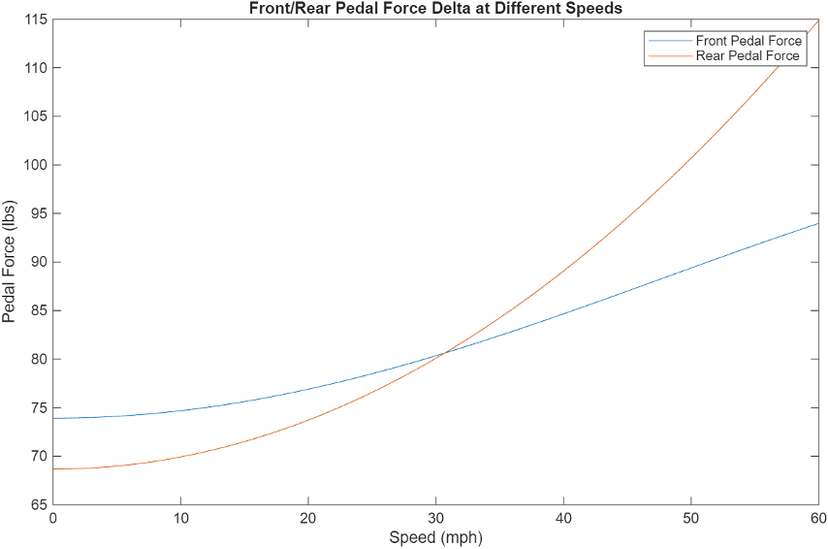
Modeled the full braking system to determine the optimal front/rear brake bias across the car's operating speed range. Computed required pedal forces as a function of speed, accounting for dynamic weight transfer, to ensure the driver could achieve maximum deceleration without inducing premature wheel lockup at either axle.
- Dynamic load transfer model across front and rear axles
- Front/rear pedal force curves computed across 0–60 mph
- Brake bias set to balance deceleration against lockup margin
- Master cylinder and pedal ratio sizing from force targets
Phase 2: Rotor Design & Mass Optimization
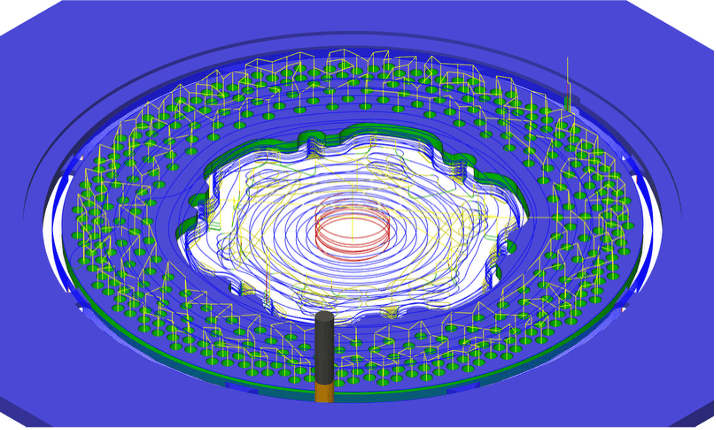
Redesigned the brake rotor vent geometry to reduce mass by 15% relative to the previous year's design while maintaining a structural factor of safety above 1.9. Iterated on vent hole count, diameter, and radial placement in CAD, using the CAM model to verify machinability before committing to toolpaths.
- 15% mass reduction versus prior rotor design
- FOS >1.9 maintained under peak braking torque loads
- Vent geometry iterated to balance mass, strength, and airflow
- CAM toolpath verified for CNC machinability prior to cutting
Phase 3: Transient Thermal Simulation
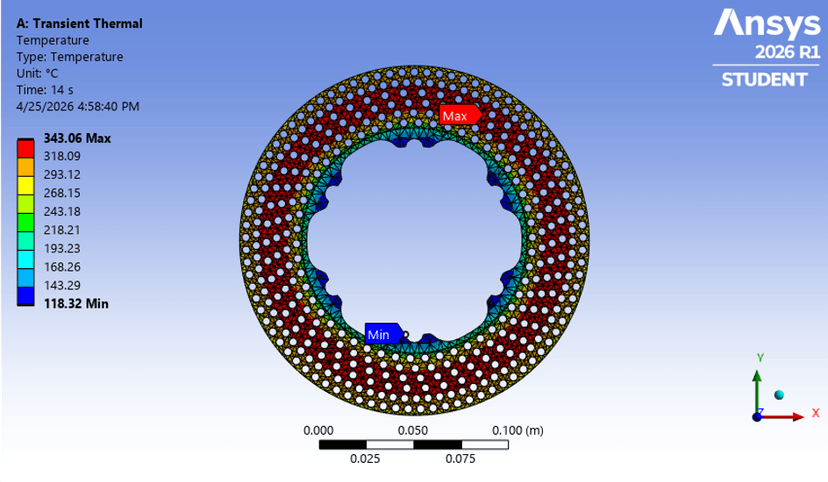
Ran ANSYS transient thermal simulations on the optimized rotor to validate heat dissipation behavior under a representative braking event. The vented geometry was confirmed to keep peak rotor temperature at 343 °C, within the material limits for the aluminum alloy used.
- ANSYS transient thermal analysis over a 14-second braking event
- Peak temperature: 343 °C at rotor outer radius
- Vent geometry confirmed to improve heat dissipation over solid baseline
- Temperature distribution validated against material operating limits
Phase 4: CNC Milling
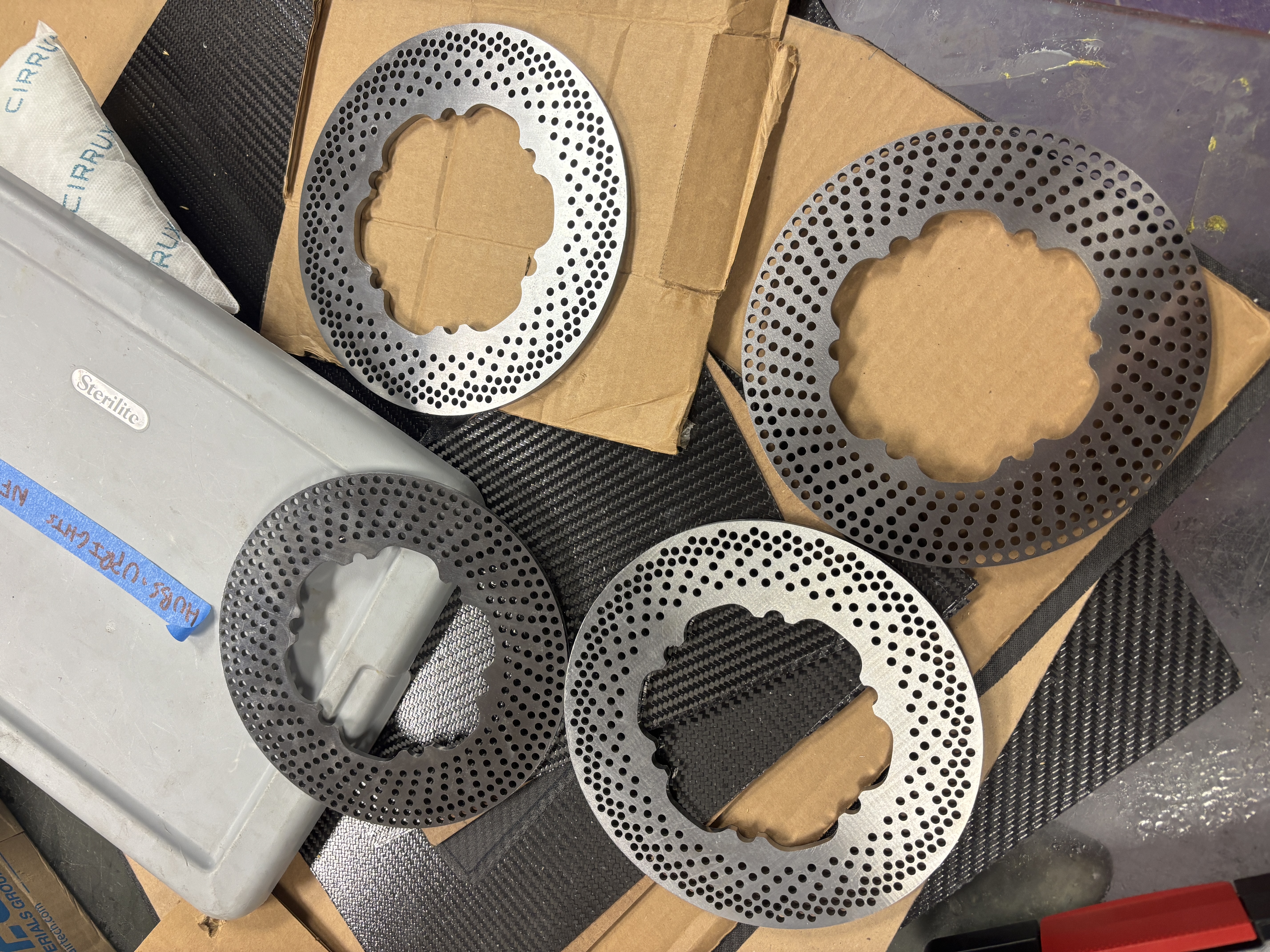
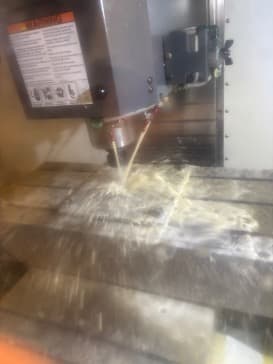
Transitioned rotor manufacturing from waterjet cutting to CNC milling to achieve the precise vent geometry defined in CAD. Waterjet left a tapered, rough edge on the vent holes that caused inconsistent pad contact; CNC milling eliminated this artifact and produced clean, repeatable geometry across all rotors.
- Replaced waterjet cutting with CNC milling for all rotor vent features
- Eliminated waterjet taper that caused uneven brake pad contact
- Achieved consistent vent geometry across all four corners
- Toolpaths generated directly from CAM model
Phase 5: Surface Grinding
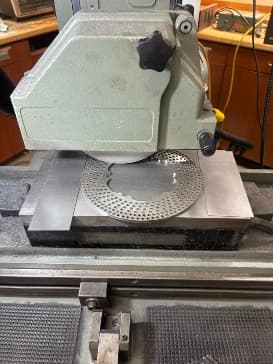
After CNC milling, rotors were surface ground to achieve flatness within 0.001". This ensured uniform brake pad contact across the full rotor face, reducing uneven pad wear and improving braking consistency.
- Surface ground to 0.001" flatness for uniform pad contact
- Eliminated residual surface irregularities from CNC milling
- Consistent finish improved pad seating and wear characteristics
- Final rotor ready for assembly and track use